Light is the soul of photography. It defines the atmosphere, emotion, contrast, and sharpness of an image. Understanding and using different types of light is essential for anyone looking to improve in photography—whether using a professional camera or a smartphone.
In this article, you’ll learn about the main types of light used in photography, how each one affects the final result, and when to use them to enhance the visual impact of your photos.
Light in Photography: More Than Brightness, It’s a Visual Language
Many people think light is just there to “brighten” a scene. But in truth, light communicates. The position, intensity, temperature, and softness of the light say a lot about the style, mood, and focus of the image.
Mastering the types of light is like learning to use different brushes and paints—each has a specific purpose.
The Most Common Types of Light in Photography
Natural Light
This is light from the sun, and it’s one of the most used by photographers, especially beginners. It can be direct (on sunny days) or diffused (on cloudy days or in the shade).
Characteristics:
- Free and abundant
- Changes throughout the day
- Creates different moods depending on the time
Influence on the photo:
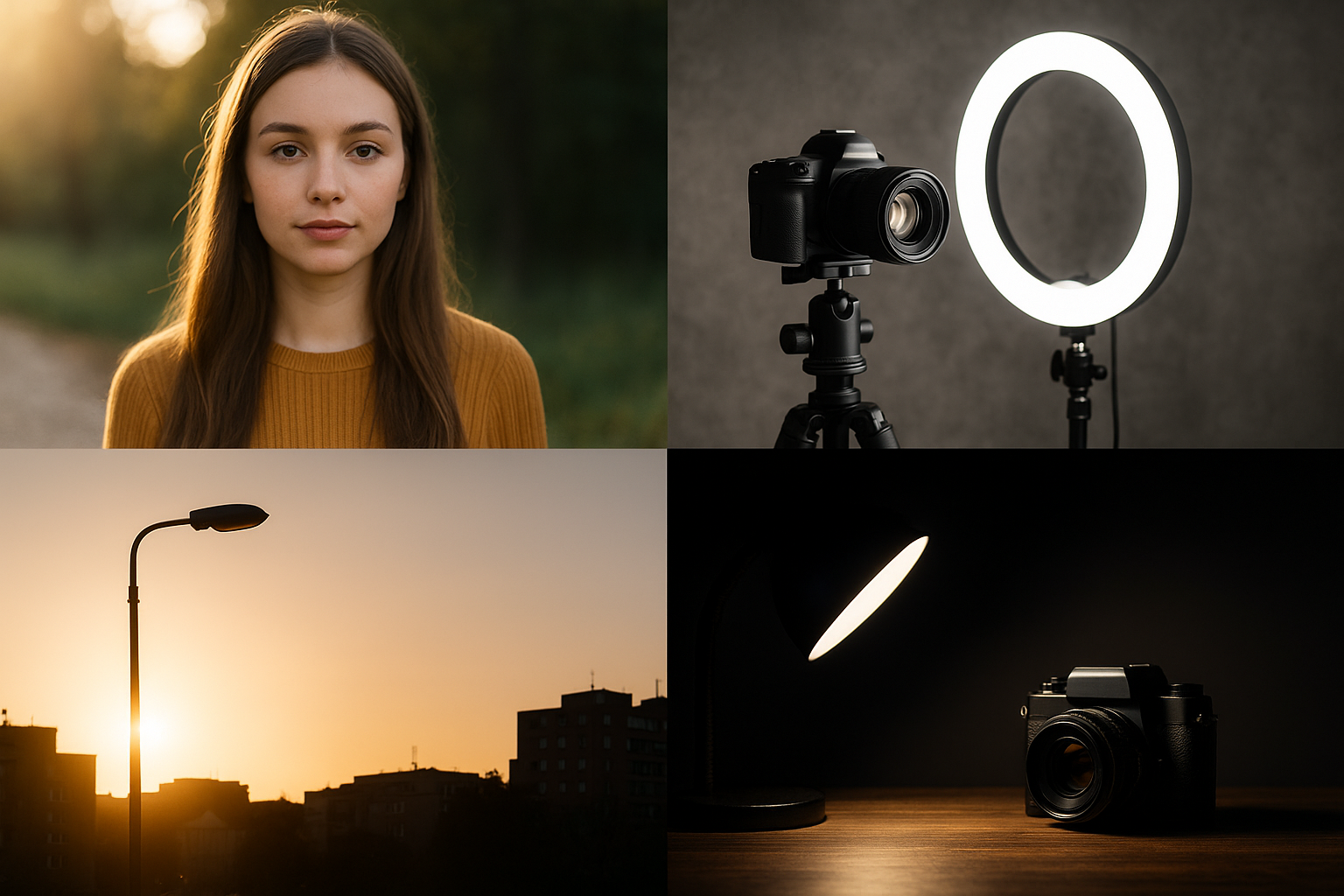
- At sunrise or sunset, it generates warm tones and soft shadows
- At midday, it creates harsh shadows and strong contrasts
- On cloudy days, it gives even and soft lighting—perfect for portraits
Tip: Observe the sun’s direction and use it to create depth or highlight specific details.
Continuous Artificial Light
These are light sources that stay on, like lamps, LEDs, spotlights, and ring lights.
Characteristics:
- You can see the effect of the light in real time
- Easy to control
- Available in different color temperatures
Influence on the photo:
- Cool white light may make skin tones look pale
- Warm light creates a cozy and natural atmosphere
- Can be soft or hard, depending on diffusion or positioning
Tip: Combine different intensities and directions to avoid unwanted shadows.
Flash (Strobe Light)
Flash is a powerful and quick light source, commonly used to freeze motion or light up dark scenes.
Characteristics:
- Very short duration (fractions of a second)
- High intensity
- Can be built-in or external
Influence on the photo:
- Direct flash may cause harsh shadows or blown highlights
- With diffusers or bounce flash, the light becomes soft and natural
- Ideal for night events, product photography, and fashion
Tip: Avoid using built-in flash directly—prefer to bounce it or use diffusers.
Hard Light
Hard light produces defined shadows and high contrast. It comes from a small and direct light source like midday sun or undiffused flash.
Characteristics:
- Strong shadows
- Accentuates texture
- High contrast
Influence on the photo:
- Highlights details and imperfections
- Creates a dramatic or stylized look
- Great for conceptual shots, architecture, or artistic portraits
Tip: Control the light’s position to avoid harsh shadows on faces or eyes.
Soft Light
Soft light produces gentle shadows and smooth transitions between highlights and shadows. It usually comes from large or diffused sources.
Characteristics:
- Low contrast
- Natural appearance
- Minimizes imperfections
Influence on the photo:
- Evens out skin tones
- Creates a comforting visual experience
- Ideal for portraits, baby photos, weddings, and food photography
Tip: Use diffusers, softboxes, or shoot near windows with sheer curtains to achieve this effect.
Backlight
This is when the light source is behind the subject, creating silhouettes or halo effects.
Characteristics:
- Creates unique visual effects
- Can be hard to expose correctly
- Common at sunset or with light sources in the background
Influence on the photo:
- Highlights shapes and outlines
- Adds emotional or mysterious atmosphere
- Can produce lens flare when used creatively
Tip: Use HDR mode or a reflector to balance foreground exposure.
Side Light
This comes from the side of the subject, creating one side lit and the other in shadow.
Characteristics:
- Enhances volume and depth
- Adds a 3D look
- Excellent for portraits and textured subjects
Influence on the photo:
- Emphasizes facial features, fabrics, or object surfaces
- Adds a sophisticated or dramatic tone
- When paired with fill light, gives total contrast control
Tip: Move the light source or subject to test various angles and effects.
How to Choose the Ideal Type of Light?
Your choice depends on the photo’s goal, style, and environment conditions. Ask yourself:
- Do I want a natural or dramatic look?
- Do I want to soften or highlight textures?
- Can I control the light, or do I need to adapt?
With these answers, you can mix different types of light to achieve professional-looking results—even with simple gear.
Final Thoughts: Light as a Creative Tool
More than just illumination, light brings life to your photography. Understanding its types, effects, and best uses is key to creating striking, emotional, and professional images.
Experiment, observe, and try different sources and angles. Photography is an art that requires practice—and light is your most powerful tool. When used wisely, it can turn any scene into a meaningful visual story.