Introduction
Soft light vs. hard light is an essential discussion in the world of photography. Understanding how each type of light affects the image is fundamental to creating visually coherent, expressive, and high-quality compositions.
Whether in portrait, product, fashion, or documentary photography, the choice between hard or soft light directly influences the atmosphere, texture, and emotional impact of the image.
In this guide, you’ll learn what differentiates these two types of light, how to identify them, and, most importantly, when and why to use each one in a technical and creative way.
What is soft light and what is hard light?
Definition and visual characteristics
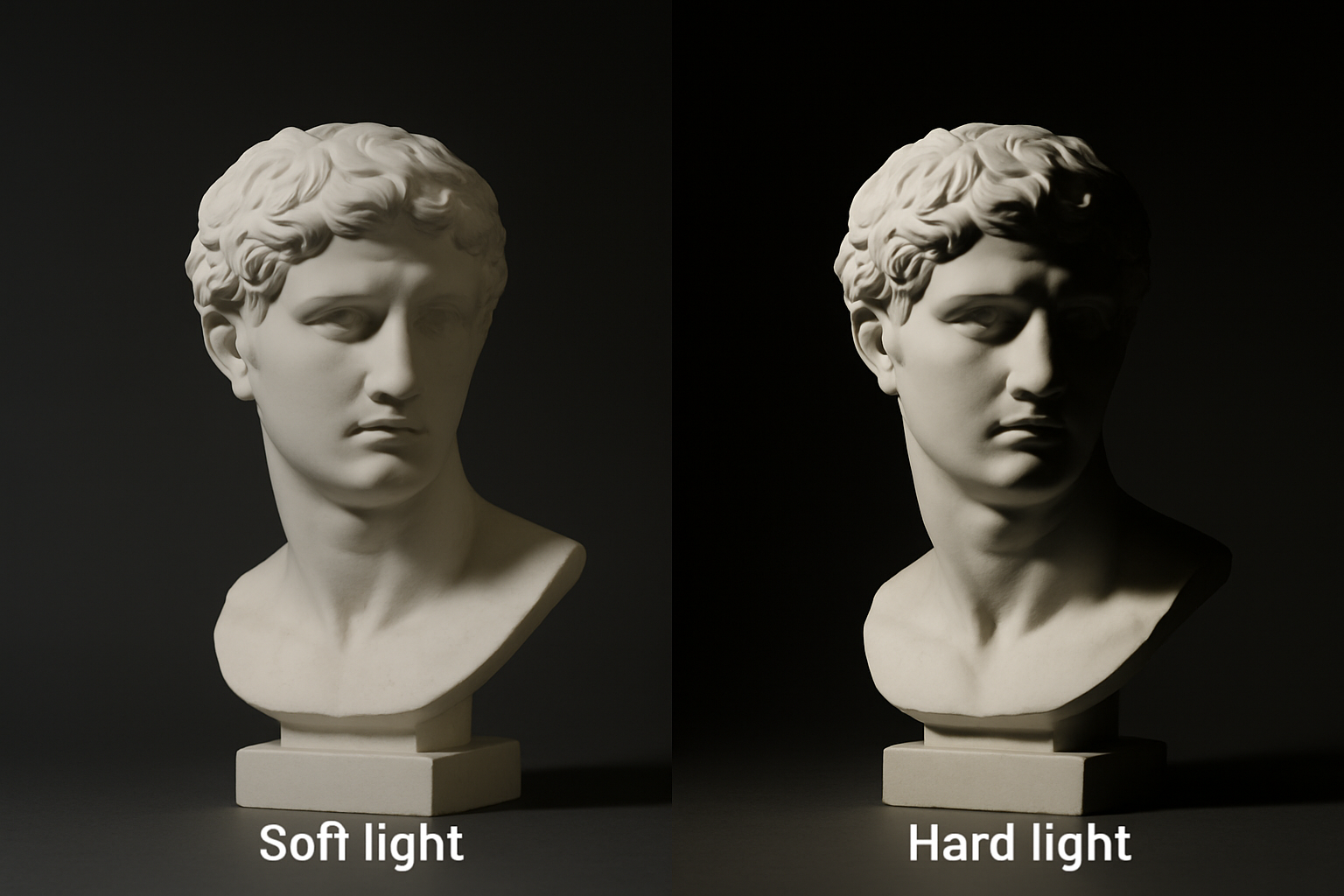
Soft light is characterized by diffused shadows, smooth transitions, and even illumination. It reduces contrast and provides a more delicate, uniform look—ideal for creating calm atmospheres or conveying comfort and warmth.
Hard light, on the other hand, creates well-defined shadows with abrupt transitions between light and dark. It increases contrast and highlights details, textures, and volumes more intensely. This quality is useful when you want to emphasize lines, shapes, or create visual impact.
How light interacts with the subject
Soft light tends to “wrap” the subject, filling in shadows and softening imperfections. It’s commonly used for portraits and emotional scenes because it flatters facial features without harshness.
Hard light emphasizes shapes, contours, and surfaces. It can convey drama, tension, or raw realism. It’s ideal for creating visual impact and enhancing texture, especially in more journalistic or artistic photography.
Factors that determine the softness or hardness of light
Size of the light source in relation to the subject
A larger light source relative to the subject tends to be softer. Large softboxes, broad windows, or wide LED panels create diffused, enveloping light, allowing for more gradual transitions between light and shadow.
Small sources like direct flashes, small reflectors, or midday sunlight create hard light because they can’t “wrap around” the subject, resulting in marked shadows and high contrast.
Distance of the light source
The farther the light source is, the harder the light becomes. That’s because the illuminated surface receives light from a narrower angle, increasing shadow definition.
Bringing the light source closer increases its angular size, softening shadows and reducing contrast. This is especially useful in portraits or food photography.
Presence of diffusers, reflectors, or modifiers
Diffusers (like translucent fabrics or softboxes) spread the light, making it softer and less directional.
Reflectors help fill in shadows created by hard light, softening the overall result. Modifiers such as beauty dishes, umbrellas, or snoots help control softness or directionality depending on the photographer’s creative intent.
Advantages and applications of soft light
Portraits
Soft light flatters the skin, conceals expression lines, and creates a welcoming atmosphere. Ideal for feminine portraits, baby photos, and elderly subjects. It also reduces the need for extensive post-processing.
Fashion and newborn photography
In fashion, soft light enhances fabrics without casting harsh shadows. In baby photography, it’s essential to convey delicacy, purity, and comfort. It ensures that eyes are well-lit without harsh reflections.
Ambient lighting and video
Spaces lit with soft light feel more natural and pleasant to viewers. It’s perfect for interviews, educational videos, vlogs, and home recordings. In cinema, it’s also used to create realistic or intimate scenes.
Advantages and applications of hard light
Product photography
With textured objects, hard light is excellent for highlighting relief, edges, and details. It creates a tactile sensation, especially useful for materials like wood, leather, or metal.
Dramatic effects and strong contrast
Theater scenes, masculine portraits, or bold editorials benefit from hard light to convey strength and intensity. It directs the viewer’s eye to specific areas of the image, increasing visual impact.
Creative and artistic lighting
Hard light allows for playing with defined shadows, geometric shapes, and minimalist compositions with strong visual appeal. It’s also used to create patterns, natural framing, or striking silhouettes.
When to choose soft or hard light?
Evaluating aesthetic intent
If the goal is to convey emotion, softness, and comfort, soft light is more appropriate. To convey energy, tension, or dynamism, hard light is more effective. The desired aesthetic should always guide lighting choices.
Considering photographic style
Fashion, advertising, and portrait photographers often alternate between the two styles depending on the shoot’s concept. In photojournalism, hard light can reinforce realism and urgency. In artistic photography, hard light enables a more graphic visual narrative.
Controlling light in studio or outdoor environments
In the studio, you have full control: softboxes, reflectors, flags, and diffusers are at your disposal. Outdoors, using natural shade, reflectors, or fabric can help soften harsh sunlight. In both cases, the photographer’s position relative to the light source significantly affects the outcome.
Techniques for turning hard light into soft light (and vice versa)
Diffusers, softboxes, and reflectors
- A softbox turns a direct flash (hard) into a soft, enveloping light.
- A reflector can “fill in” hard light shadows, balancing exposure.
- White fabric or acrylic panels also act as DIY diffusers and are easy to transport.
Light direction and distance
- Bringing the light source closer softens the light; moving it farther away hardens it, changing shadow definition.
- Using flags or snoots directs the light and makes it more focused, adding contrast and visual emphasis.
Creating shadows and shaping contrast
- For controlled hard light, use grids and spotlights to cast precise shadows.
- To soften without losing contrast, combine soft key light with hard rim light, creating elegant subject separation from the background.
Common mistakes when using hard and soft light
Lack of exposure balance
With hard light, it’s common to overexpose highlights and underexpose shadows. Use the histogram and light meter to control the scene’s dynamic range.
Improper use for the subject
Using hard light for delicate portraits may be too aggressive. Using soft light for highly textured products might result in “dull” images. Always align lighting with the visual message and target audience.
Light as visual language: exploring its expressiveness
The choice between soft light vs. hard light goes far beyond technique. It’s a visual language that communicates feelings, ideas, and aesthetic stimuli. Each light source has character and contributes to the final image’s identity.
Learning to manipulate these two extremes with intentionality and mastery is essential for any photographer who seeks not just to capture images but to build impactful visual narratives. Light doesn’t just reveal—it interprets.
Study, experiment, and practice with different sources, distances, and modifiers. Over time, you’ll master the art of controlling light with precision and creativity, making it your ally in crafting memorable imagery.